

Building Inspection FAQs

Building inspection FAQs & what to expect


Got questions about what to expect during a building inspection? From report turnaround times and roof access to common defects in older Tasmanian homes, CheckMark provides clear, straight answers for properties across Launceston and Northern Tasmania. Browse our FAQs below to see what’s included in your pre-purchase inspection and buy or sell with total confidence.
Booking and getting started
-
A pre-purchase building inspection is an independent visual assessment of a property before you commit to buying it. It helps you understand the visible condition of the building, the significant defects identified at the time of inspection and any areas that may need further specialist advice.
-
A property can look presentable while still having significant problems. An inspection gives you clearer information before you make a major financial decision and may help you budget for repairs, seek further advice or reconsider the purchase.
-
Book as early as the contract and access arrangements allow. Your conveyancer or solicitor can advise you about any contractual deadlines. If a deadline applies, tell us when booking so we understand the timeframe.
-
Yes. You can book through the Checkmark website or contact us directly if you would rather discuss the property first.
-
Access is normally coordinated with the selling agent, owner or property manager using the details supplied with the booking. The inspection can only cover areas that are safely and reasonably accessible on the day.
-
No. Many clients, particularly interstate buyers, cannot attend. You will receive a written report, and you are welcome to contact the inspector afterwards to discuss the significant findings.
-
Yes. A large proportion of Tasmanian property buyers are interstate and may never have seen the property in person. The report is designed to explain the important findings clearly, with photographs and practical context.
-
The fee depends on the property, location and service required. Contact Checkmark or use the online booking process for the current price. If the property is unusually large, remote or complex, any different fee will be discussed before the inspection proceeds.
-
Checkmark is based in Launceston and services Launceston and surrounding regions. For a property farther away, contact us with the address and we will confirm whether we can attend and whether travel affects the fee.
-
The inspection generally considers the accessible site, exterior, interior, roof exterior, roof space, subfloor, foundations and other primary building elements relevant to the agreed service. Garages, carports, decks, wet areas, kitchens and laundries are considered where accessible and within scope.
-
Where safe, accessible and practical, these areas are important parts of the inspection. Access may be restricted by small openings, low clearance, insulation, stored items, services, unsafe conditions or the construction of the building. Any significant access limitation will be recorded in the report.
-
No. A standard pre-purchase inspection is visual and non-invasive. The inspector does not cut holes, lift fixed flooring, remove wall linings, dismantle fittings or move heavy furniture. Defects concealed inside walls, beneath finishes or behind stored items may not be visible.
-
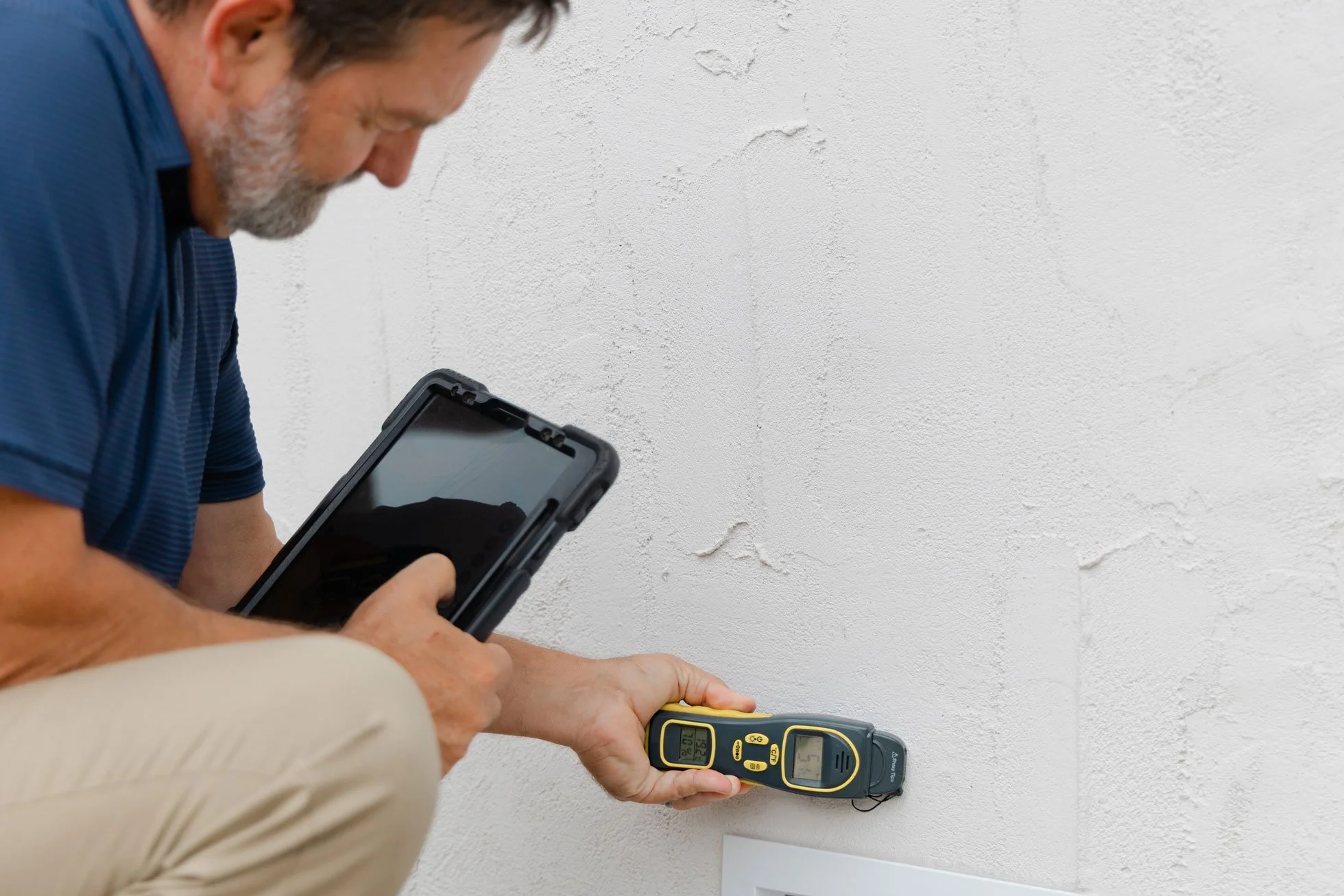
Moisture-testing equipment may be used where appropriate to investigate accessible areas and visible signs of dampness. Readings provide useful supporting information but do not reveal every concealed leak or moisture problem.
-
Accessible plumbing fixtures may be operated as part of the inspection where appropriate, but the service is not a comprehensive plumbing inspection. Appliances, specialist systems and every individual fitting are not performance-tested unless specifically included in the agreed scope. A plumber or other specialist should assess any concern requiring detailed testing.
-
Visible electrical safety concerns may be reported, but a building inspection is not an electrical safety inspection or compliance certificate. Electrical testing should be undertaken by a licensed electrician.
-
Not necessarily. A pre-purchase inspection is not a building survey, approval audit or compliance certificate. Older buildings were constructed under the requirements and practices of their time. Where an apparent safety or compliance concern is visible, it may be reported and further advice recommended.
-
No definitive asbestos identification is provided without specialist sampling and laboratory testing. Materials that may warrant further investigation can sometimes be noted, particularly in older buildings, but suspected asbestos should be assessed by a suitably qualified specialist.
-
Checkmark's standard service is a building inspection, not a combined timber-pest inspection. Tasmania does not have the same established termite exposure as many mainland regions, but timber decay, borers, rodents and other pest-related issues can still occur. If there is a specific concern, arrange advice from an appropriate pest specialist.
-
The inspector may report visible mould, dampness or conditions that appear conducive to mould. The inspection does not include laboratory testing, air sampling or a specialist mould assessment.
What the inspection covers
-
Common restrictions include locked doors, missing keys, occupants, furniture, stored goods, floor coverings, insulation, low roof or subfloor clearance, unsafe ladders, wet weather, vegetation and inaccessible outbuildings. The report records material limitations that affected the inspection.
-
If the inspector attends but the property or important areas cannot be accessed, the available areas may be inspected and the limitation reported. Depending on the circumstances, a return visit or attendance fee may apply. Access should be confirmed before the appointment wherever possible.
-
Yes. Rain, strong wind, wet or slippery surfaces and poor light can restrict roof access and other exterior observations. Weather can also make some moisture problems more apparent. Any important limitation will be explained in the report.
-
Yes. Occupied homes often contain furniture, floor coverings, cupboards and stored goods that prevent a complete view of walls, floors and other surfaces. These items are not normally moved during a standard inspection.
-
No. The report records the conditions that were visible and accessible at the time of inspection within the agreed scope. No visual inspection can guarantee that every defect, concealed condition or future problem has been found.
Access and limitations
-
A major defect is generally a significant problem affecting an important building element that requires substantial repair or urgent attention. A minor defect is less serious but may still require maintenance or repair. The classification depends on the nature, extent and context of the defect, not simply its appearance.
-
Yes. Photographs are used to help locate and explain important findings. They support the written report but do not replace it, so the descriptions and recommendations should also be read carefully.
-
A standard building inspection is not a quotation or quantity-surveying service. Repair costs can vary greatly once work begins and concealed conditions become known. Where cost is important to the purchase decision, obtain written quotations from appropriate licensed trades or specialists before relying on a figure.
-
Yes. Clients are encouraged to ask questions about significant findings or anything they do not understand. Clear communication is an important part of the service.
-
Read the recommendation attached to the finding and discuss the contractual implications with your conveyancer or solicitor. You may also need an engineer, licensed trade, building surveyor or other specialist to define the cause, extent and repair requirements before making a decision.
-
The decision remains yours. The report provides building information to assist your judgment, but it does not replace legal, financial, planning, engineering or specialist advice.
-
That depends on your contract and circumstances. The inspector can explain the building findings, but your conveyancer or solicitor should advise whether and how the report can be used in negotiations or under a contract clause.
-
The report is prepared for the named client under the agreed pre-inspection agreement. It should not be passed to another person as a substitute for obtaining their own inspection and advice.
-
A follow-up inspection may be available by arrangement. It is limited to the agreed items and visible conditions at the time of the return visit; it does not certify workmanship or replace documentation from the responsible builder, engineer or licensed trade.
Understanding the report

-
The issues vary with age, location, construction and maintenance. Common concerns can include subfloor moisture and poor ventilation, drainage problems, ageing roofs and gutters, movement or deterioration in older structures, timber decay, leaking wet areas, unsafe decks and additions or alterations with uncertain approval history.
-
Older houses often contain a mixture of original construction, later alterations and decades of repairs. They can be perfectly serviceable, but they usually require ongoing maintenance, monitoring and realistic expectations. New defects can emerge as materials age or maintenance falls behind.
-
Not automatically. Requirements depend on when the work was carried out, what was approved and whether later alterations occurred. A building inspection can identify visible concerns, but approval and compliance records should be checked separately with the relevant council or building professional.
-
Yes, but the purpose and scope should be discussed first. A standard pre-purchase inspection is different from staged construction inspections, a defects inspection under a building contract or certification of completed work.
-
Yes, subject to the agreed scope. A unit inspection generally focuses on the accessible interior and directly associated areas. Common property, roofs, subfloors, services and body-corporate responsibilities may require separate records or specialist investigation.
-
Visible signs of alteration may be noted, but approval status cannot be confirmed by appearance alone. Ask your conveyancer or solicitor to obtain the relevant council, planning and building records before settlement.
Tasmanian properties and common concerns

-
Checkmark inspections are carried out by a qualified and insured builder with more than 30 years of building-industry experience. The focus is practical, independent reporting that helps buyers understand what matters.
-
Yes. The duty is to the client who commissions the inspection. Checkmark does not soften findings to suit an agent, seller or other party involved in the transaction.
-
You receive a thorough inspection, clear explanations, photographs and the opportunity to discuss the findings directly. The aim is not to alarm you or tell you that everything is fine; it is to give you an honest picture of the visible condition of the property so you can make an informed decision.
-
Provide the property address, agent or access contact, relevant contractual deadline, your contact details and any particular concerns you want the inspector to consider. If you already know of access restrictions, renovations or unusual construction, mention them when booking.
About Checkmark